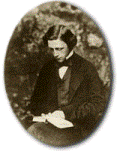
Author Visit with Raymond Wong
10 years ago


I was born on a Thursday, the 12th of August, 1937, in Martinsburg, West Virginia. My name at birth was Walter Milton Myers. For some strange reason I was given to a man named Herbert Dean who lived in Harlem. I consider it strange because I don't know why I was given away.
I was raised in Harlem by Herbert and his wife, Florence. Herbert was African American. Florence was German and Native American and wonderful and loved me very much.
As a child my life centered around the neighborhood and the church. The neighborhood protected me and the church guided me. I resisted as much as I could.
I was smart (all kids are smart) but didn't do that well in school.
I dropped out of high school (although now Stuyvesant High claims me as a graduate) and joined the army on my 17th birthday.
Basketball has always been a passion of mine. Sometimes at night I lie in bed thinking about games I've played. Sometimes I think about what would have happened if I had gone into the NBA (I was never good enough) or college ball.
Anyway.... I wrote well in high school and a teacher (bless her!) recognized this and also knew I was going to drop out. She advised me to keep on writing no matter what happened to me.
"It's what you do," she said.
I didn't know exactly what that meant but, years later, working on a construction job in New York, I remembered her words. I began writing at night and eventually began writing about the most difficult period of my own life, the teen years. That's what I do.

Bill lives in just outside of Phoenix with his longtime partner, Chuck. They have an Australian Labradoodle named Mabel, who completes them. She also can jump very high and head a ball like a champion soccer player.
Bill is now a full-time writer of fiction, which is his dream job. Except when it makes him crazy and impossible to live with, which is about 36 percent of the time.
Before Bill was a fiction writer (and long before he ever referred to himself in the third person), he was a sports writer. As a sports writer and editor for The Associated Press from 2005-08, he covered the New York Mets and his weekly fantasy baseball column appeared in newspapers across the country, from the New York Daily News to the Seattle Post-Intelligencer. In May of 2001, while working for ESPN.com, he came out on the front page of the website in an article entitled “Sports World Still a Struggle for Gays.” That article won him a GLAAD Media Award the following year.
Since then, he has spoken at numerous venues across the country on what it’s like to be a gay person in the world of sports. He has written for The New York Times, New York Daily News, North Jersey Herald and News and Denver Post, to name a few. His work has also appeared in Out Magazine. In 2011, his coming out was named the #64 moment in gay sports history by the website Outsports.com. His story was included as a chapter in the book “Jocks 2: Coming Out to Play” by Dan Woog.

April Henry knows how to kill you in a two-dozen different ways. She makes up for a peaceful childhood in an intact home by killing off fictional characters. There was one detour on April's path to destruction: when she was 12 she sent a short story about a six-foot tall frog who loved peanut butter to noted children's author Roald Dahl. He liked it so much he arranged to have it published in an international children's magazine. By the time she was in her 30s, April had started writing about hit men, kidnappers, and drug dealers. She has published more than a dozen mysteries and thrillers for teens and adults, with five more under contract

QuinRose~クインロゼ~』では、
女性主人公のファンタジー恋愛アドベンチャーゲームを中心に制作しています。
※関連作品として、男性主人公のゲームも制作しております。
2010年からソニーのパブリッシャーとなり、
現在は家庭用機ゲームを主に開発中です。
In "QuinRose ~ Kuinroze ~",
Has produced mainly female hero fantasy romance adventure game.
※ as related work, we have also produced male hero game.
And publisher of Sony from 2010,
And is currently developing a game machine primarily for home use.

Jun Mochizuki (望月 淳 Mochizuki Jun, born December 22 in Kanagawa Prefecture, Japan) is a Japanese manga artist, best known for creating the manga series Pandora Hearts.

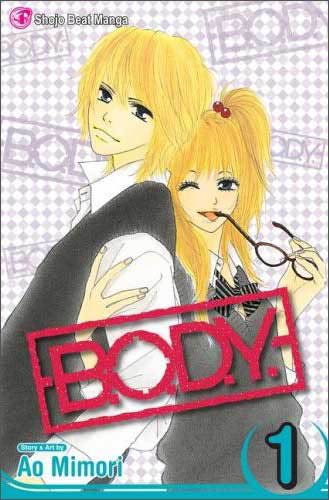

Matthew Quick (aka Q) is the New York Times bestselling author of THE SILVER LININGS PLAYBOOK, which was made into an Oscar-winning film, and three young adult novels: SORTA LIKE A ROCK STAR; BOY21; and FORGIVE ME, LEONARD PEACOCK. His work has been translated into twenty-eight languages, received a PEN/Hemingway Award Honorable Mention, was an LA Times Book Prize finalist, a New York Times Book Review Editors’ Choice, a #1 bestseller in Brazil, and selected by Nancy Pearl as one of Summer’s Best Books for NPR. His next novel for adults, THE GOOD LUCK OF RIGHT NOW, is forthcoming from HarperCollins in February 2014. All of Q’s books have been optioned for film.
Q was born and spent the first few years of his life in Philadelphia before being raised just across the Delaware River in Oaklyn, New Jersey. He graduated from Collingswood High School (class of 1992) and La Salle University (class of 1996), where he double-majored in English and secondary education. He taught literature and film at Haddonfield Memorial High School in New Jersey for several years, during which he coached soccer and basketball, chaperoned trips to Peru and Ecuador, initiated a pen-pal exchange with students in Namibia, and counseled troubled teens.
In 2004 Q made the difficult decision to leave teaching and pursue his dream of becoming a fiction writer. He received his Master of Fine Arts in Creative Writing from Goddard College in 2007. He now lives in Massachusetts with his wife, novelist/pianist Alicia Bessette.

I was born in 1952 in Berkeley, California. I lived in the Bay Area until I was five, by which time I had three younger siblings. In 1958 we moved to St. Louis Park, Minnesota, where my parents continued to produce offspring. By 1964 I had four brothers and two sisters. I attended Cedar Manor Elementary School (also the alma mater of Al Franken and the Coen brothers), and eventually graduated honor-free from St. Louis Park High School. This is so tedious. Why do you keep reading?
For the next seven years I attended college, first at the Minneapolis College of Art & Design, then at the University of Minnesota, where I took nearly every one-level class offered, but very few three- or five-level classes. I left college without graduating, but knowing a little bit about nearly everything, and a great deal about absolutely nothing. That superficial education now serves me well at cocktail parties, and as a novelist.
After college I worked various jobs for which I was ill-suited, including sign painter, graphic artist, marketing executive, painter cap salesman, pineapple slicer, etc. Eventually, having no better options, I decided to write a novel. I finished writing Drawing Dead in 1991. Two years later it was published by Simon & Schuster.
In 2004 my novel Godless won the National Book Award for Young People's Literature. That's a huge deal if you are a writer. It made me deliriously happy.
Today, I live with novelist and poet Mary Logue in Golden Valley, Minnesota and Stockholm, Wisconsin. We have one small dog (are you still reading?) named Gaston. When I'm not writing or reading, I like to cook, run, bike, inline skate, hunt mushrooms, look at art, and take naps.

Holly Black is the bestselling author of contemporary fantasy novels for teens and children.
Her first book, Tithe: A Modern Faerie Tale, was published in 2002 by Simon & Schuster. Tithe was called "dark, edgy, beautifully written and compulsively readable" by Booklist, received starred reviews from Publisher's Weekly and Kirkus Reviews, and was included in the American Library Association's Best Books for Young Adults. Holly has since written two other books in the same universe, Valiant (2005), and the sequel to Tithe, Ironside (2007), which spent five weeks on the New York Times bestseller list. Valiant was a finalist for the Mythopoeic Award for Young Readers and the recipient of the Andre Norton Award for Excellence in Young Adult Literature.
Holly has also been a frequent contributor to anthologies, and has co-edited three of them: Geektastic (with Cecil Castellucci, 2009), Zombies vs. Unicorns (with Justine Larbalestier, 2010), and Bordertown (with Ellen Kushner, 2011). Her first collection of short fiction, Poison Eaters and Other Stories, came out in 2010 from Small Beer Press. She has just finished the third book in her Eisner-nominated graphic novel series, The Good Neighbors, and is working on Red Glove, the second novel in The Curse Workers series. White Cat, the first in the series, is out as of May 2010, and is about capers, curse magic, and memory.
Holly lives in Massachusetts with her husband, Theo, in a house with a secret library.About Cecil Castellucci:
Cecil Castellucci is the author of books and graphic novels for young adults including Boy Proof, The Plain Janes, First Day on Earth, The Year of the Beasts and Odd Duck. Her picture book, Grandma’s Gloves, won the California Book Award Gold Medal. Her short stories have been published in Strange Horizons, YARN, Tor.com, and various anthologies including, Teeth, After and Interfictions 2. She is the YA editor of the Los Angeles Review of Books, Children’s Correspondence Coordinator for The Rumpus and a two time Macdowell Fellow. She lives in Los Angeles.

Q. When were you born?
A. August 24, 1977
Q. Where did you grow up?
A. Primarily in Orlando, Florida but also a little bit in Birmingham, Alabama
Q. Where do you live?
A. I currently live in Indianapolis, Indiana. I wrote most of The Fault in Our Stars and much of Paper Towns here. We used to live in New York City, where I wrote part of Paper Towns and most of An Abundance of Katherines. Before that, I lived in Chicago, where I wrote Looking for Alaska.
Q. Did you receive any formal education?A. Yes, I graduated from Indian Springs School (in Alabama) and then received a B.A. from Kenyon College (in Gambier, Ohio), where I double-majored in English (mostly Mark Twain) and Religious Studies (mostly Islam).
Q. Did you want to be a writer when you were younger?A. Yes, but I always thought being a writer was, like, being an astronaut or playing in the NFL or something. It always seemed to me a very unrealistic dream. (I still don’t think of writing as my fulltime job: I make videos and help run record companies and other stuff.) Shortly after I graduated from college, I began working at Booklist Magazine. Booklist is an amazing magazine. Every two weeks, they review HUNDREDS of books. It slowly dawned on me that each of those books was written by someone, and I started to feel like maybe I could be one of those someones. During these years, I was also very blessed to have one of my editors at Booklist, Ilene Cooper, mentor me and encourage my writing. Ilene is an author, and through our friendship, I realized that people who write books are not, like, fundamentally different from other people. (Well, Ilene is smarter and funnier and better-informed than almost anyone else, but you know what I mean.)
So, yes, I wanted to be a writer. But it wasn’t until I was much older–in my 20s–that it seriously occurred to me that I could be a writer.
Q. Where do you get your ideas?A. I don’t really know. If I had a better understanding of where my ideas came from, I would go there and acquire more ideas. I don’t tend to have big ideas, like, “A SCHOOL FOR WIZARDS!” or “VAMPIRES IN SUBURBIA!” My stories tend to start out with people: a child prodigy who hits the wall of his intellectual talents. A religious but not fundamentalist Muslim in the South. A young woman kept alive but uncured by a novel cancer treatment. These characters mix with questions that interest and/or haunt me: Why are we so interested in leaving a legacy? Can we construct meaning in a world that is so profoundly apathetic toward us? Is it possible to have a full life without having a long life? That’s where my books start, really. They begin at the intersection between people I’m imagining and questions that bug me.
Q. What was your childhood like?A. I was extremely fortunate. My parents loved and encouraged me; my brother was empathetic and supportive; my friends (when I had them) were lots of fun without being too dangerous. That said, due to some malfunctioning brain chemistry and also due just to the nature of being a person, I often felt isolated and alone and scared. I was quite nerdy and dearly wished that I could be popular. I think I was quite difficult to be around–my insecurity and anxiety made it difficult for me to have straightforward, engaging social interactions with anyone, and I was really super self-absorbed.
I don’t particularly recommend any of these personality traits, but I do think spending a lot of time in my youth (particularly middle school) alone was helpful to me as a writer: For one thing, I read a lot. For another, I spent a lot of time listening to other people talk.
Q. Do you have advice for young writers?A. That is not really a biographical question, but yes, I do. I believe that reading is a writer’s greatest apprenticeship. We learn how to write by paying attention to all the ways that writers who’ve come before us used this meaningless scratches on a page to bring stories to life in the minds of readers.
My other recommendation is to tell stories to your friends and pay attention to when they get bored. I still do this a lot, and it helps me understand how to pace a story, and what kind of phrases and images audiences find engaging.
About Kate Rudd:Finally, trust your critics. When someone identifies a weakness in your story, they are almost always right. They may not have identified quite the right weakness, and they may not have quite the right solution, but if your readers are bothered by something, then things have gone awry. If you’re going to ask for readers’ time, after all, the story you write has to be a gift for you and for them.
"It's a rare book that gets you laughing and crying at the same time," Kate Rudd says of John Green's YA novel, THE FAULT IN OUR STARS. "The book was really a visceral experience for me--it was the kind of book that I would have read at home, in private, because of the crying," she confesses. "I'm kind of an emotional person anyway, so the engineers and the directors are used to me. I think there were at least 100 pages where I was physically crying, and not trying to show it in every moment, but you can't always keep it out of your voice. Sometimes it actually serves the script, because of Hazel's breathing issues. So if at times I was a little breathless from the story, it was okay."
When Rudd began recording audiobooks two years ago, she did almost exclusively YA titles. "I don't know if it's just because my voice was still a little bit younger--I'm only 31. I really like young adult literature. I think it's some of the smartest writing that's out there, so it's been really satisfying to be able to tell those stories." Rudd's mom was a librarian, and Rudd says she naturally grew up with a love for books. "She didn't ever tell me that because I was a certain age, here's what I needed to be reading. She just had piles of books, and I went picking and found things that were interesting to me."
Rudd, who lives in West Michigan near the Brilliance Audio studios, happened upon narrating as something to supplement her acting career. "There's a lot going on here in terms of short films and independent films. There's not a lot going on here that would be enough for all of us actors to support our families on. There's enough to stay active and to occasionally catch a windfall, but a lot of times we do it because we love it and because we are hearty people."
But she discovered that audiobook work was a passion. "I'd like to do this until I'm old and gray. In the beginning, this was a temporary stopgap measure--I needed a job; I'm an actress; I'm trying to raise some kids; here, this is close enough; I'll do this for awhile. That was my attitude going in. I quickly fell completely in love with it and found it to be so surprisingly gratifying, and if I can find a way to do this forever, I will."--Jennifer M. Dowell

Who exactly was Lewis Carroll?
Charles Lutwidge Dodgson, known by his pen name, Lewis Carroll, was a man of diverse interests — in mathematics, logic, photography, art, theater, religion, science, and of course literature. He was happiest in the company of children for whom he created puzzles, clever games, and charming letters. And of course, he also told them stories.
As all Carroll admirers know, his book Alice’s Adventures in Wonderland (1865), became an immediate success and has since been translated into more than eighty languages. The equally popular sequel Through the Looking-Glass and What Alice Found There, was published in 1872.
The “Alice” books are but two examples of his wide ranging authorship. The Hunting of the Snark (1876), a classic nonsense epic, and Euclid and His Modern Rivals (1879), a rare example of humorous work concerning mathematics, still entice and intrigue today’s students. Sylvie and Bruno (1889), published toward the end of his life, contains startling ideas including a description of weightlessness.
The humor, sparkling wit and genius of this Victorian Englishman have lasted for more than a century. His books are among the most quoted works in the English language, and his influence (as well as that of his illustrator, Sir John Tenniel) can be seen everywhere, from the world of advertising to that of atomic physics.
Why did Mr. Dodgson write under the pen name of Lewis Carroll?
As a modest gentleman and a scholar/instructor at Oxford, he valued his privacy very highly. He would refuse letters sent to “Lewis Carroll, Christ Church, Oxford”, claiming no such person lived there! But he did occasionally use his pen name to smooth an introduction to a well-known member of society or new child friend.
How did he come up with the name Lewis Carroll?
He took the first two parts of his name, Charles Lutwidge, and translated them into Latin: Carolus Ludovicus. He then reversed their order: Ludovicus Carolus, and then loosely translated them back into English: Lewis Carroll. He actually supplied his first publisher with a short list of possible pen names, and it was the publisher who selected “Lewis Carroll” from the list. Share that bit of trivia at your next mad tea party!
Was there a real Alice?
Indeed there was. Alice Pleasance Liddell was arguably Charles Dodgson’s greatest child friend. She was one of the daughters of Henry George Liddell, Dean of Christ Church, Oxford, where Mr. Dodgson lived, taught and wrote.
Was Lewis Carroll in love with Alice?
To say that much has been written on this question would be a monumental understatement. For the purposes of this site, suffice it to say that in addition to being a friend during her childhood years, she was his first true creative muse. Interestingly, Alice Liddell also inspired a number of other well known artists of the time, including John Ruskin, William Richmond and Julia Margaret Cameron. The fact that the two “Alice” books are still so beloved today stands as a testament to the lasting power of that original inspiration, and to Mr. Dodgson’s timeless genius.
What was the origin of the Alice books?
Mr. Dodgson would often take young Alice and her sisters Lorina (older) and Edith (younger) on leisurely rowing expeditions in the company of a fellow Oxford scholar. During these boat rides and subsequent picnics, he would make up fantastical tales to entertain the girls. What we now know as Alice’s Adventures in Wonderland began as one of these stories, and was only written down because Alice begged Mr. Dodgson to do it. The first version, which he wrote and illustrated by hand for her, was entitled Alice’s Adventures under Ground. Some of the most famous chapters of Alice’s Adventures in Wonderland were actually written only after his friend (and noted children’s author) George MacDonald and his family encouraged Mr. Dodgson to explore the idea of expanding and publishing the story so that more children could enjoy it. Alice’s Adventures in Wonderland met with instant success, as did its sequel, Through the Looking-Glass and What Alice Found There.
Can Lewis Carroll’s creativity and writings be explained by any possible drug use, epilepsy, migraines, or other mind-altering circumstance?
In brief: no, no, no, and no. Based on all evidence unearthed to date, unless you count the occasional use of an over-the counter homeopathic remedy, Lewis Carroll was not a drug user. This may disappoint lazy media hounds and Miley Cyrus, but that’s the truth as we currently know it, and given Carroll’s abstemious personality and conduct, that particular finding is unlikely to change. Similarly, while he had a couple of seizures of one kind or another in later years, and wondered if one of them might be “epileptiform” in his diary, he also recorded afterward that his own doctor told him that it was not, and there was no history of it in his immediate family line. And while he records that he occasionally had a very bad headache, including some descriptions that sound like migraine symptoms, we have no hard facts that could lead one to say uncontestably that he suffered from migraines. Seizures and severe headaches can be caused by any number of things, and providing a medical diagnosis more than 100 years after the fact is not advisable. It’s fascinating what people since Carroll’s time have tried to read into his life after reading his remarkably inventive works. Our explanation for how the Alice books, the Snark, and all Carroll’s other writings came to be is simple: the man was extremely talented.
Genre:


Copyright © Kazumi Reads -Black Rock Shooter- Powered by Blogger - Designed by Johanes Djogan